
by Sandy Ludington
March 26, 2026
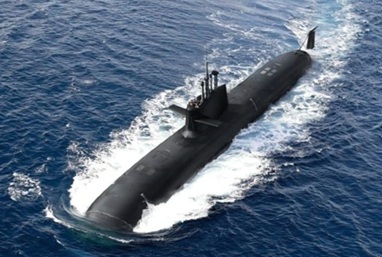
Spanish S-80
In 2013, the Spanish Navy learned that its planned class of air‑independent propulsion (AIP) submarines (the S‑80 class, with first delivery targeted for 2015) had a fatal design flaw. After hundreds of millions of dollars in design work, engineers discovered the submarine could not float.
Media coverage of the episode (for example, headlines about a misplaced decimal point) framed the problem as a comically simple engineering error. It seemed that a single calculational error had gone undetected long enough for the final design to weigh100 tons more than was workable. This, not surprisingly, led to delays, a hull lengthening, and significant added costs in design, construction, and pier infrastructure. While eye‑catching, this framing is misleading. Placing responsibility for a complex, multi‑billion‑dollar program on a single calculation error misses the deeper lesson.
If the issue were truly just a “fat‑finger” error—one engineer shifting a decimal—then the solution would be straightforward: add second checkers, more reviews, and stricter supervision. Every competent engineering organization already does these things. But is that enough? If an engineer makes one error in every 1,000 calculations, and an independent checker does the same, that still yields an error rate of one in a million. On systems with thousands of components, each with extensive requirements and calculations, is that sufficiently safe?
Experience says no.
Success in designing and delivering complex systems does not come from doing more isolated engineering work or rechecking calculations ever more frequently. Checks and reviews help and are often essential ingredients, but broader program success comes from disciplined Systems Engineering. Systems Engineering establishes clear requirements, decomposes them coherently, validates that they truly meet the mission or business need, and verifies that the design satisfies those validated requirements. It also addresses cost, lifecycle management, technology risk, and supply‑chain readiness—areas where complex programs often fail.
Navantia, the Spanish firm responsible for the S‑80, undoubtedly employed capable engineers and had Systems Engineering processes. But somewhere along the way, those processes broke down. The weight imbalance almost certainly emerged from a combination of flawed requirements decomposition, missed validation, and incomplete verification—not just a single arithmetic mistake. Calculation checks alone cannot protect against systemic design failure.
The Spanish Navy is not alone. In March 2025, the U.S. Government Accountability Office issued a report to Congress titled “Navy Shipbuilding: Enduring Challenges Call for Systemic Change.” GAO characterized U.S. Navy shipbuilding over recent decades as a “consistent failure,” citing recurring, systemic weaknesses across multiple ship classes. Notably, these failures were not due to a lack of technical skill or labor availability, but instead are attributable to persistent issues such as requirements instability, insufficient risk management for unproven technologies, and unrealistic commitments and expectations—precisely the problems Systems Engineering is meant to address.
And yet, disciplined Systems Engineering can work. Commercial aviation routinely delivers machines of astonishing complexity with safety and reliability exceeding that of far simpler technologies. NASA famously codified these practices in its Systems Engineering Handbook. Aerospace is certainly imperfect (and healthy organizations always recognize their imperfections), but it is generally a domain of solid Systems Engineering practice.
At Novellum Partners, we believe complex systems must begin with strong processes that govern design, development, and deployment. Designing without stable requirements, building before design maturity, or proceeding without mechanisms to manage risk is asking for failure. Using proven Systems Engineering practices, tools refined across diverse development environments, and guided by high‑reliability principles, we help our clients build the culture, teams, and processes needed to deliver excellent products and avoid costly failures.
Your product may not be a submarine (or it may be!) but only the simplest systems can survive without rigor. Ignore disciplined design processes, and your submarine may not sink at the pier. More likely, it will never be built at all.